


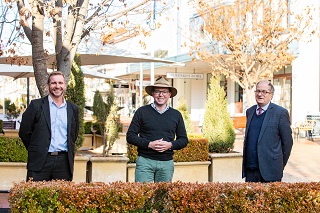
 Southern New England Landcare congratulates Elwyn Hegarty of Armidale as the winner of our 2020 Member Survey $100 voucher draw!
Elwyn was 'over the moon' when she called in at the Landcare office in Hanna's Arcade to pick up her gift voucher, and has chosen to spend it all at her favourite local bookstore, Boobooks in Armidale. We hope you enjoy many hours of reading, Elwyn!
Image - Elwyn Hegarty is pictured with Struan Ferguson (left) and Karen Zirkler (right) at the Southern New England Landcare office, while receiving her prize.

 $1 million worth of projects funded in the Armidale and Guyra region
 A small team of researchers, land managers and practitioners at the University of New England and Northern Tablelands Local Land Services are embarking on an environmental project to protect and restore two locally endangered woodlands here in the heart of the New England.
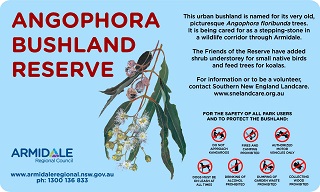 Angophora Bushland Reserve, at the junction of Bona Vista Road and Burgess Street in south Armidale, is a precious piece of bushland remaining within the town boundaries. It is small, only 1.35 ha but enough for large native trees to grow, mature, and shed branches. This is when most eucalypts develop hollows.
 BirdLife Australia regret to inform that the August round of the biannual surveys for Swift Parrots and Regent Honeyeaters has been cancelled. The official survey period was scheduled to occur from 25 July to 9 August 2020.
 We're COVIDSafe, but we'd like to request that visitors to our office make an appointment , so we can ensure we maintain physical distancing in our small office space. We have a limit of 1 visitor in our reception area at any one time, so if you arrive and see someone already there, please knock and wait outside, or call us on 6772 9123 to make an appointment. You can
 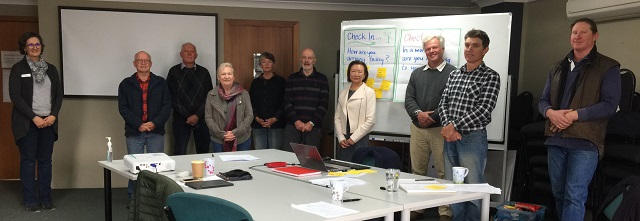 The start of the new financial year marks a fresh milestone in a 25 year partnership between Southern New England Landcare and Armidale Regional Council.
 African lovegrass is a species in the Northern Tablelands which is widely distributed. It has low feed value, can quickly colonize disturbed areas and can grow to a large perennial tussock grass of 1.2 m in height. African lovegrass grows on acidic, sandy soils with low fertility and can tolerate heat, drought and frosts. It is a born survivor.
 The years 1989-1992 saw the formation of several Landcare groups in the Southern New England. Around the same time, two amazing women began their careers in grazing and soil management, undertaking their Doctorates of Philosophy through the University of New England with one of our early Landcare groups.
 For the past few months, Southern New England Landcare has been involved in developing an implementation role in the Restore Australia Project, the largest restoration project the country has ever seen.
 Dear Members - re the National Landcare situation,
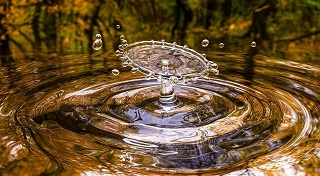 A free public webinar being held this month will give community members the latest information about the Groundwater Supply Network being developed in the Guyra district.
 Recently Parthenium weed has been found west of the Northern Tablelands on the slopes and plains. Plants were found on a drought feeding station, sourced from millet hay which came from northern Queensland last winter in the middle of the 2019 drought.
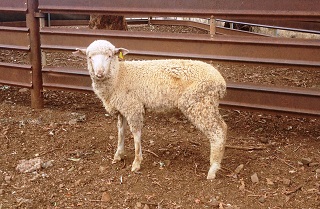 A spike in health issues and deaths in sheep, particularly amongst weaners, has prompted a call to farmers to investigate ill thrift early and take action before problems spread to the rest of the mob.
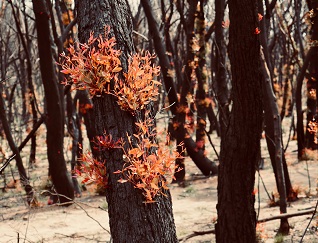 Federal Member for New England, Barnaby Joyce, said individuals and organisations at the centre of protecting our native species could now receive additional Federal Government support to help with the recovery of wildlife and habitats following the devastating bushfires.
 Rural landholders will decide who is elected to Local Land Services boards around the state with voting underway since Thursday, April 9.
 Blue Heliotrope is a native of South America and is a major agricultural weed in in New South Wales.