


 In 2017 ornithologist Dr Andrew Huggett conducted surveys of bird communities in native vegetation in the Armidale to Uralla district as part of our NSW Environmental Trust 'Closing the Gap' project. Here's what he found.
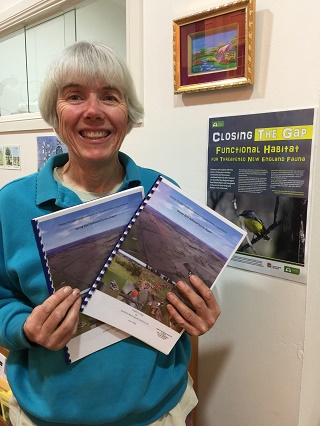
Image - SNELandcare member Helen Webb enjoys her copies of the survey reports, which contain many beautiful bird images.
This work was undertaken to obtain data on bird occurrence, abundance, species richness and habitat use at 36 sites (29 planted, 7 woodland remnant) on 15 properties in the gap zone.
Dr Huggett recorded a total of 994 individual birds from 69 species during the spring 2017 survey.
The 6 woodland remnants supported 44 species, including the threatened (in NSW) Varied Sittella and birds of local conservation significance such as Eastern Yellow Robin, Dusky Woodswallow, Striated Thornbill, Buff-rumped Thornbill, White-throated Treecreeper and the migratory, hollow-nesting Dollarbird.
Older planted sites (16-25-year-old) were utilised by 22 bird species from 14 families. These included species that often occur in woodland remnants such as Brown Thornbill, Striated Thornbill, Rufous Whistler, Grey Shrike-thrush, Yellow-faced Honeyeater, Crimson Rosella and Grey Fantail.
Intermediate aged plantings (6-15-year-old) supported 17 bird species, mostly those able to utilise food, shelter and nest sites available in developing shrubs and trees such as Superb Fairy-wren, Yellow Thornbill, Spotted Pardalote and the warm-season breeding migrant Scarlet Honeyeater.
Young revegetation (1 month-5-year-old) provided habitat for 34 species, typically more common, open country birds – Yellow-rumped Thornbill, Eastern Rosella and Australian Magpie.
27 of the 36 sites were surveyed during the first round of site monitoring in winter 2017.
A further 9 sites were added to the survey program for the spring 2017 round. Sites were also assessed for their habitat and landscape connectivity, habitat condition and revegetation and regeneration histories.
The Closing the Gap: Functional Habitat for Threatened New England Fauna Project, funded by the NSW Environmental Trust, took place between 2016 and 2019. Graziers involved in this project undertook on ground works consisting of tree and shrub planting, direct seeding and remnant protection to help close a 23km gap in habitat connectivity for threatened and declining woodland birds and other fauna of the beautiful New England region - from Mount Butler and Invergowrie in the west to Gara Gorge and Dangars Falls in the east.
To obtain a copy of the survey reports click here.