

 Southern New England Landcare is looking for landholders to help answer a big question: how much greenhouse gas do our farm dams give off, and what can we do about it?
Farm dams release methane, carbon dioxide and nitrous oxide. Through Pass the Pondi, we’re working with RMIT University’s Centre for Nature Positive Solutions to measure these emissions across the Southern New England region.
What’s a Pondi?
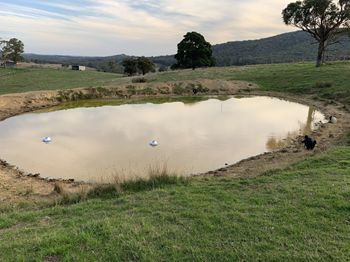
A Pondi is a small floating monitor that sits on the surface of your dam. It measures CO₂, methane and nitrous oxide, and sends its data automatically. There’s nothing for you to operate, although the Pondi needs to be lifted after 3 days to release the accumulated greenhouse gasses.
Image: Courtesy of RMIT University’s Centre for Nature Positive Solutions.
How it works?
1. Book a week: choose one or more dams and a week that suits you.
2. Get your Pondis: we drop them off, or you pick them up. Each dam gets one Pondi.
3. They measure: the Pondis record emissions for 7 days.
4. Pass them on: we collect them, or you return them, ready for the next farm.
Why get involved?
Hosting is free. You’ll get a report on Southern New England farm dams. Your data will help develop a pathway for farmers to earn carbon credits by improving how they manage their dams. We’ll also ask some optional questions about your dam, such as soil type and livestock access. You choose what you share.
Book your week
Weeks are limited. To register, contact Southern New England Landcare on 02 6772 9123 or mail@snelandcare.org.au
This event is part of Revive & Thrive: Future Ready Farm Dams Project, supported by the NSW Government through the Landcare Enabling Program Phase 3 Innovations and Partnerships Grant Program.